
Small Team, Big Impact
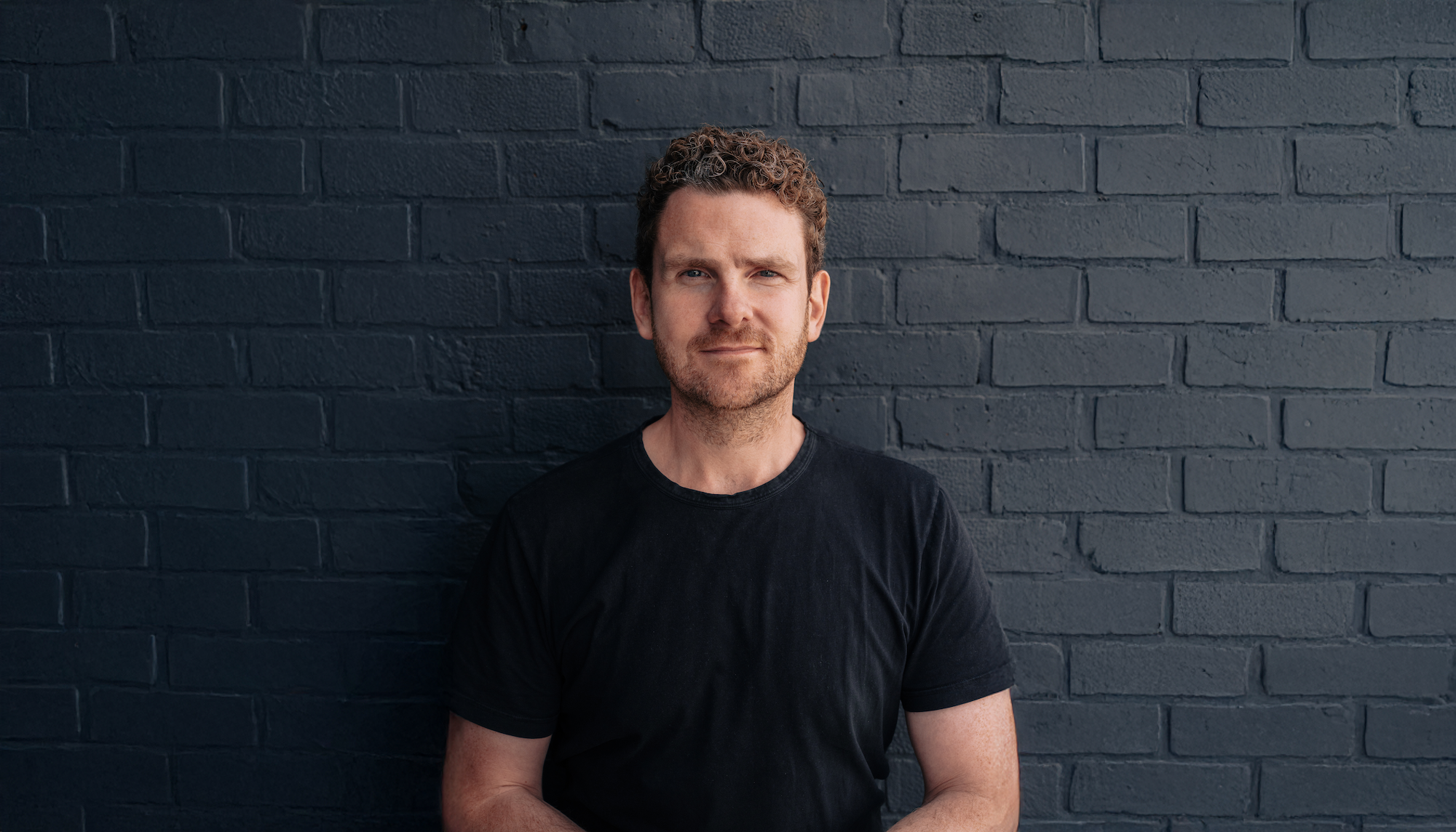
From a seaside village in Co Louth to the heart of San Francisco’s tech scene, Patrick Murphy has turned a childhood fascination with computers into Tapestry VC, a lean, four-person firm that has experienced significant success. Murphy explains the strategy.
None of Patrick Murphy’s friends were interested in computers in school. Growing up in Blackrock, a seaside village in Co Louth, he used to buy PC World Magazine and painstakingly learn about code by typing and tapping it into his computer.
He remembers getting his first modem and connecting to the internet for the first time. “My Mum was really worried that I’d break our computer,” he laughs.
But it started a journey, one that would lead him to the Mission District in San Francisco as a co-founder of Tapestry VC.
Over the last seven years, it has raised nearly $100 million (€86 million) to invest in technology companies.
The companies his funds invest in are regularly namechecked in Fortune, Techcrunch and The Information. They include Nothing, a consumer technology company that raised $200 million last month at a $1.3 billion valuation.
And Zapp, an on-demand delivery app unicorn backed by Formula 1 champion Lewis Hamilton. Ladder, a strength-training app which raised over $100 million last year, is also a portfolio company.
In Ireland, Manna, the drone company founded by the businessman and entrepreneur Bobby Healy, is a well-known investment.
But who is Patrick Murphy? And how has he climbed so high on the West Coast?
During an hour-long video call from his San Francisco apartment, he opens up about his journey from investment banking to venture capital, sharing how he has backed six seed-stage companies that have each gone on to achieve annual revenues exceeding $100 million.
He discusses the future of Tapestry, highlighting its ambition to support more start-ups led by serial founders, and explains the strong connections between his firm’s investments in Europe and the United States. Along the way, he also reflects on a lesser-known chapter from the company’s past, including its high-profile clash last year with Dartry-to-Qatar’s leading event manager, Paddy Cosgrave. It is a fascinating story that is still unfolding.
A handbrake turn to finance
When Murphy talks about Blackrock or St Mary’s College, he is not talking about private schools in Dublin. Instead, he talks about his home town in Co Louth and the Dundalk secondary school he attended.
It was, by his own admission, a bit of a “culture shock” when he went to UCD to study mechanical engineering. “Blackrock and St Mary’s meant different things in Dublin,” he says.
His entrepreneurial zeal was quickly evident, however, with Murphy starting a web development agency during school. Building websites helped fund him through college.
He enjoyed engineering. “I was working with robots, lasers, and all kinds of things and ended up doing pretty well,” he said.
A J1 student work visa to San Diego had exposed him to America. “I knew I wanted to learn more about business from running my own business,” he said. “I took a handbrake turn into finance.”
Murphy remembers looking up ms.com to find out more about Microsoft, but ending up on Morgan Stanley’s website instead.
“I could see they seemed to be hiring smart people who liked maths and engineering, so I started to think about investment banking for the first time,” he said. Murphy started sending out CVs, including applying to Goldman Sachs, which hired him in June 2008 as an intern in London before moving him to New York. Murphy ended up in the bank’s technology, media, and telecoms team.
“I worked on a lot of different deals, but one was helping the current owners of the San Diego Padres (the Seidler family) buy the baseball team. So that was an interesting sort of full circle.” Another early deal was working in the Goldman Sachs team advising Hellman and Friedman LLC on its $200 million purchase of Web Reservations International, the then-owner of Hostelworld, in 2009.
He also worked on Vodafone’s sale of its 45 per cent stake in Verizon Wireless for $130 billion in 2013, and financier Mark Walter’s buyout of the LA Dodgers in 2012. Murphy went in at the bottom, but as the years went on, he moved up. Then came a deal that changed his trajectory from investment banking to VC.
Moving into venture capital and music
In 2012, Universal Music Group was in the process of acquiring EMI’s music division, home to iconic artists like Pink Floyd and Coldplay. To secure the European Commission’s approval for the £1.2 billion (€1.5 billion) deal, Universal needed to divest some of its labels. Murphy moved back to London to work on this complex transaction for Goldman Sachs.
“I was 5,000 kilometres away from the office in New York, so it was quite autonomous,” he told me. “I was compressing an incredible amount of learning and being given responsibility, and making decisions that any 20-something-year-old should have no business doing.” Murphy got to know Boyd Muir, the CFO of Universal Music, and another senior executive, Jeremy Erlich, during the long months of dealmaking.
Murphy suggested to Universal that it set up a corporate venture capital division – just like Intel, Google, Qualcomm and Comcast had done – but that it should focus on its area of expertise: music. This is how, at 27, Murphy set up Universal’s venture capital division.
Universal already had a stake in Spotify, so it came into this new division. It quickly started to make investments in businesses like Shazam, a music discovery app later bought by Apple.
“The fund was meant to be a $100 million commitment, but we didn’t deploy that much,” Murphy said.
As Spotify took off, Murphy was closely involved. “In the pre-IPO rounds, we had the opportunity to invest more, and that was something I recommended.”
The fund also invested in Musical.ly, later bought by Bytedance in 2017 and merged into TikTok in a $2 billion deal. “I still remember seeing Musical.ly for the first time, and our team testing it out with an Ariana Grande song. We watched what happened, and it was so powerful. It was very clear, very early on, this was going to be quite large. It was very clear that this was a new mode of communication that was going to be really, really interesting.”
Notions to Nothing
Patrick Murphy’s remit with Universal was to invest in music or entertainment technology companies. But he was seeing other emerging businesses, which he was convinced were going to be worth billions. “In my career in venture, there have been moments when you see something and you’re like: ‘This is going to be good. This is the way it’s meant to be,” he recalled.
He came across a company called Notion, a workspace for teams, which he thought had the potential to become a unicorn. “Unfortunately, I couldn’t convince a media company that Notion was in a sector that was adjacent enough,” Murphy said.
The fund passed on the deal. Today, Notion is worth north of $10 billion. “There was another legal tech company that also later became a unicorn but I couldn’t convince them to invest in that either, so that was kind of the last straw. I decided to start my own business then,” he said.
Murphy started to talk to David Kelly, a co-founder of Web Summit, about setting up a venture fund. But he was in the process of getting his green card to work in the United States, so he had to wait before doing something. “It was totally irrational to start a VC fund because I didn’t know many people with money, so I had to go and build those relationships from scratch,” he said. “I was able to do that well and got some institutional investors along for the ride.
“Ultimately, the ‘why’ was really the insight about repeat founders. From my time at Universal, I’d see how some companies scaled very quickly and some of them didn’t. The ones that did were where the founders had very clear experience. Repeat founders, who had achieved modest success, were able to do it again by founding businesses which became much greater successes.”
Patrick Murphy: “Nothing’s a business we really believe in, and we have doubled down on.”
“Around 2017, I was chatting to David and co, and the strategy was very much: Let’s find experienced founders,” Murphy recalled. “Let’s invest in them, because we think there is a greater probability that they will succeed.”
Murphy knew Kelly from Web Summit, a conference business. The majority shareholder in this business was Paddy Cosgrave, but Kelly held a significant minority stake.
“Through my M&A work, I had worked on some other conferences and media businesses, so I thought Web Summit was a really interesting business,” Murphy said. “We’d stayed in touch and I knew the other co-founder [Cosgrave] as well.”
The trio decided to set up a venture capital fund, originally called Amaranthine. The fund was rebranded as Tapestry after Murphy and Kelly split from Cosgrave in acrimonious circumstances that were settled earlier this year. This formed part of a broader settlement, which saw Cosgrave buy out Kelly and another co-founder, Daire Hickey, from Web Summit for multimillion-dollar sums. It is not a topic Murphy cares to dwell on.
“The legal distractions around Web Summit have now been resolved and dismissed; throughout, Tapestry VC remained focused on its portfolio and performance,” he said. “And I’m very glad that is now showing in our performance.”
Tapestry has three funds: its original fund, and then a second seed fund, and a third opportunities fund, which allows it to invest in more advanced-stage businesses. In total, it has raised nearly $100 million from a combination of institutional investors like Molten Ventures, a large pension fund and family offices and angel investors.
Tapestry has notable Irish angel investors, including Sarah Friar, the CFO of OpenAI; Des Traynor, co-founder of Intercom; and, more recently, Dómhnal Slattery, a founder of Avolon. Murphy said he first met Friar when they were both working together in Goldman Sachs.
“When I moved out to San Francisco, she became a great mentor,” he said.
Murphy said he got to know Slattery’s team more recently when they were preparing a paper on innovation in Ireland, and interviewing various tech leaders as part of their research. “I got to know Dómhnal then, and we stayed in touch. He recently joined Nothing Technology’s latest round via our firm,” he said.
Tapestry was the first European VC to invest in Nothing, a ground-breaking consumer electronics company that makes its own design-led smartphones and earbuds. The business had zero revenue in 2020, but is expected to surpass $1 billion this year. “It’s a business we really believe in, and we have doubled down on,” Murphy said. “It has raised $200 million at a $1.3 billion valuation, but we believe it has a long road ahead that will compound to greater and greater heights. I think it’s our largest position. We backed it at seed, and we’ve been able to invest more in it using our opportunity fund.”
Zapp, he said, was on a similar trajectory. “It has passed the $100 million revenue milestone,” he said. Tapestry was also the first institutional investor in Ladder, the strength training fitness app, which has since raised more than $100 million. “Its revenues have grown 20x since we invested and it is on a path to unicorn status,” he said.
Cybersecurity firm Maze AI, according to Murphy, was another portfolio company that was growing fast. “We were Maze AI’s first investor, and co-led its seed round last year,” it said. “In June, it raised a $25 million series A led by Theory Ventures. Again, it has experienced founders who previously helped scale and exit from a UK cybersecurity company.”
Tapestry’s other high-profile investment was a virtual events company called Hopin, which took off during the pandemic before falling back to earth. “It went from a seed valuation to a $7.75 billion valuation,” Murphy said. “We’d met the company, seen the software, and found our way into the deal alongside Accel. In these deals, they don’t want anyone else involved but we were able to say that we were going to add value and give good advice. I remain close to Johnny Boufarhat today.”
The AI opportunity
According to Murphy, the rise of a new generation of start-ups aligns perfectly with Tapestry VC’s investment thesis. He explained that Tapestry isn’t focused on picking winners and losers among the world’s largest AI infrastructure companies, despite their extraordinary valuations.
“Our focus is on investing at the product layer, in companies that have a product or data advantage,” he said. “We aren’t deploying billions of dollars. We want to help new companies that are using these technological advances to create really, really great tech products.”
He added: “It’s a really interesting time for repeat founders because they have the experience to build companies quickly, and now they have amazing new tools they didn’t have before.”
“What we’re seeing is founders thinking of new problems or seeing old problems in a new light, and running at those with their experience, with the fact that they can hire great teams very quickly, with the fact that they know how to talk to customers, know how to get customers, know how to generate revenue and create delightful product experiences.
“We think there is a great opportunity for repeat founders. There is a huge supercycle, especially with the second generation of European founders starting new companies. Our aim is to continue to deploy our fund, which has been going really well, and then continue to grow the business in future funds as well.”
Murphy highlighted Sunrise Robotics as an example of the type of European firm Tapestry is backing. The intelligent industrial robotics company has been supported from pre-seed to its recent $8.5 million seed round, which closed in June.
“Sunrise is leading Europe’s AI robotics renaissance in our view,” Murphy said. The Slovenia-based company has three experienced founders — two of whom previously founded other tech companies — while the third, Irishman Joe Perrott, was formerly a senior executive at PCH International. “We are operating in a really constrained labour environment at the moment, and Sunrise has raised a large seed round but doesn’t need hundreds of millions of dollars to train robots.”
Another company to watch, he added, is Seapoint, a financial platform for start-ups founded by former Stripe chief information officer Sean Mullaney. “It is already trusted by start-ups and aims to put finance on autopilot,” he said. “Again, it’s our repeat-founder thesis at work. They have a great team who we are convinced can disrupt the incumbents.”
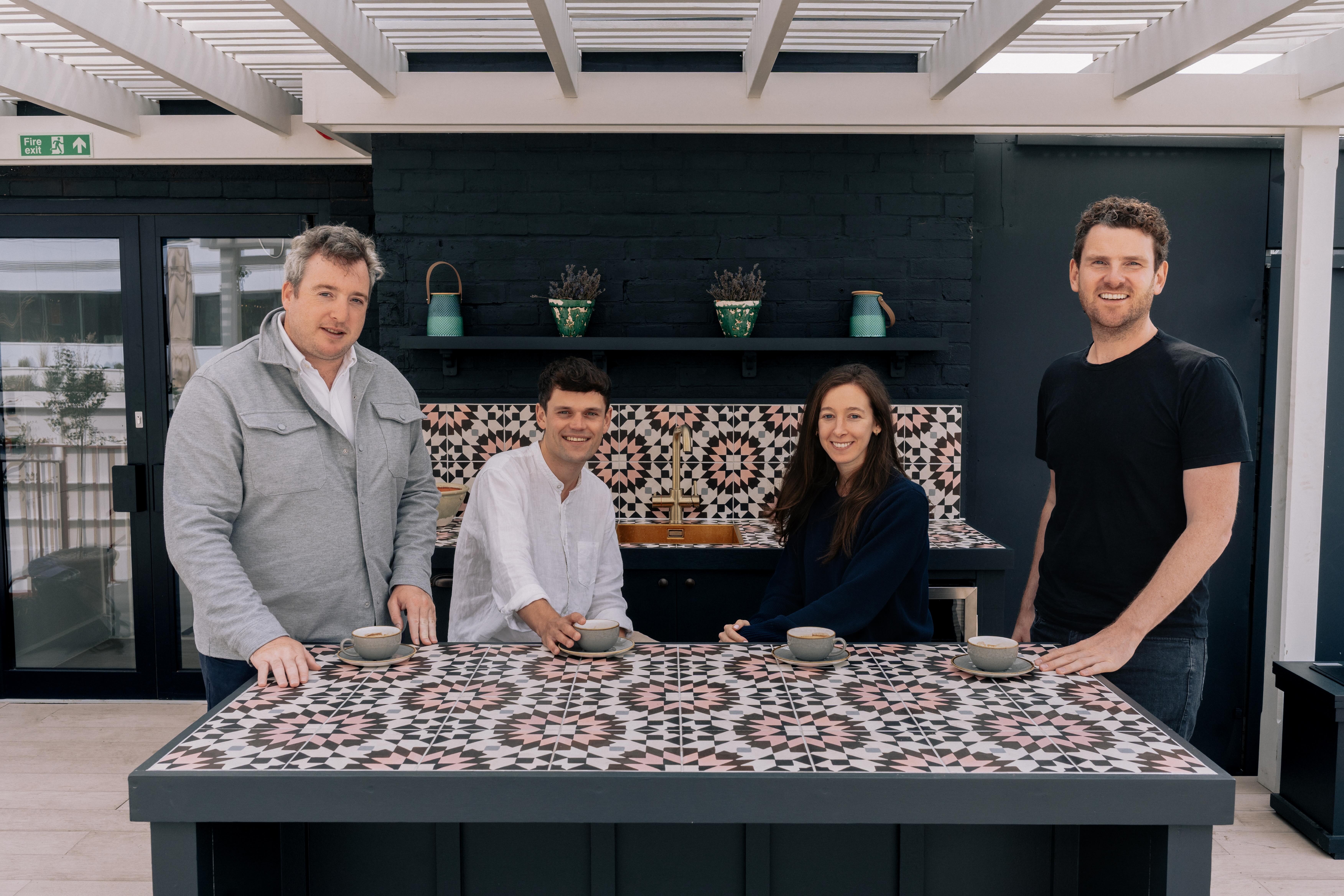
Tapestry operates with a lean team of just four people: Murphy and Kelly, along with partner Audrey Miller and Robert Dobie, who oversees finances. Despite its size, the firm competes with some of the world’s biggest venture capital names, including Sequoia, Accel, and Andreessen Horowitz, as well as hundreds of other firms.
Its early-stage portfolio companies have raised over $700 million in follow-on capital in the last 18 months. Its second set of funds, totalling $50 million, are in the top five per cent of VC funds globally, with Tapestry being named as the emerging manager of the year at the EUVC Awards in May.
“If you’re a big fund, you can just show up and give people money and rely on your brand,” Murphy said. “When you’re a new business like us, you have got to work at it. We are realistic with our founders and we help them on their journey. We often meet them even before they’ve decided to jump off the deep end and start another company. We offer good counsel and give an objective point of view and I think that allows us to win the respect of the people we work with.”